Website Strategy

How a Simple Website Can Automate Parts of Your Marketing

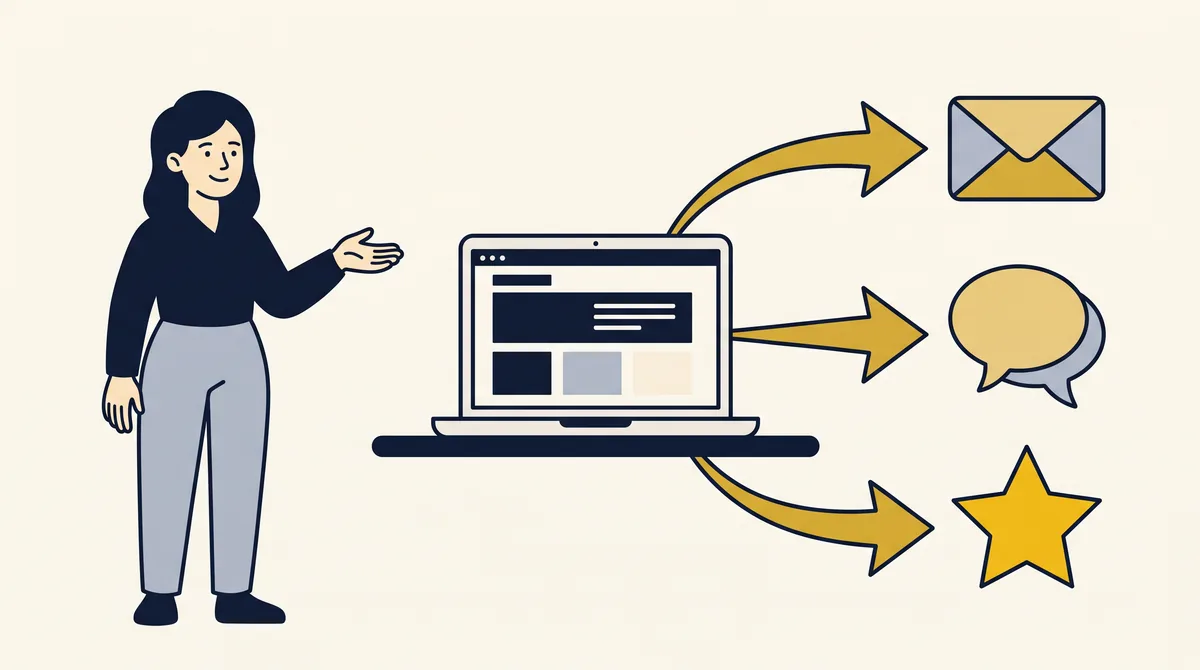
Your website doesn’t need to be a complicated web app to help with marketing. With the right outside tools and integrations, even a simple static website can collect leads, trigger follow-ups, request reviews, and help you stay in touch with customers.

In This Article

A lot of business owners think of a website as something people visit to read about the business. And yes, that is part of it. But your website can do more than just sit there and show information. It can actually help start things.

Someone fills out a form. Someone books an appointment. Someone makes a purchase. Someone joins your email list. Those actions can trigger other things to happen automatically. And you do not need a complicated website with customer logins and dashboards to make that happen.

Your Website Can Be the Starting Point

I like to think of the website as the starting point. Someone comes to your site because they are interested in something. Maybe they want an estimate. Maybe they want to schedule a call. Maybe they want to buy something. Maybe they are just looking around and want to hear from you later.

The website can collect that action and then pass the information to another service. That is where automation starts.

What Does Marketing Automation Actually Mean?

Marketing automation sounds more complicated than it is. Basically, it means: when this happens, automatically do that.

For example: someone fills out a contact form. Their information gets added to your CRM. They receive a thank-you email. You get notified about the new lead. A few days later, they may receive a follow-up.

That is automation. You are not manually copying an email address into three different systems. The systems are talking to each other.

A Simple Website Can Still Connect to Other Tools

This is one reason I like keeping the main website simple. The website does not have to do everything itself. It can connect to services that are already good at what they do. For example, your website might connect with:

The website stays simple. The tools around it handle the more specialized jobs.

Automatically Following Up With Leads

Let’s say someone visits your website and fills out a form asking for an estimate. Without automation, you may receive an email and then have to manually respond later. That can work.

But you can also have the system immediately send a simple confirmation. Something like: “Thanks for reaching out. We received your request and will be in touch soon.”

That does two things. It lets the customer know the form actually worked. And it gives you a little more time to respond without making them wonder if their message disappeared. From there, the lead can also be sent into your CRM or email system automatically.

Building an Email List

Not everyone who visits your website is ready to buy. That does not mean they are useless traffic. You may have someone who is interested but still comparing options. If they join your email list, you now have a way to stay in touch.

A simple website can collect the email address and send it directly to your email marketing service. You do not need a customer account. You do not need someone logging into your site. You just need a form and a connection.

Automatically Asking for Reviews

This is one of my favorite examples because a lot of businesses know reviews are important but forget to ask for them.

Let’s say someone completes a purchase or finishes a service. That event can trigger a process. Maybe they receive a thank-you email right away. Then a few days later, they receive another message asking how everything went. If they had a good experience, you can make it easy for them to leave a Google review.

The business owner does not have to remember to send every request manually. The system can do it consistently.

“The goal isn’t to make your business look more technical. It’s to make the repetitive work happen without you having to think about it every time.”

What About Online Payments?

You can do the same kind of thing with payments. Let’s say your website uses an external Stripe checkout. The customer clicks a button on your website. Stripe handles the payment. After the payment is completed, Stripe can notify another system that the purchase happened.

That notification can trigger other actions. For example:

Your website does not have to store the customer’s payment information to make that work.

What Is a Webhook?

You may hear me use the word webhook when talking about this. A webhook is really just one system telling another system that something happened. That is the simple version.

For example: Stripe says, “This payment was completed.” Your website or another service receives that message. Then it knows what to do next. Maybe that means sending information to Mailchimp. Maybe it means updating your CRM. Maybe it means triggering an email.

Webhooks are one of the ways you can connect simple websites to much more powerful systems without turning the website itself into a complicated application.

Do You Need Zapier or Make?

Not always. Services like Zapier and Make are useful because they make it easier to connect different systems without writing much code. But they are not the only way to do it.

If the services you are using have APIs or webhooks, you can sometimes connect them directly. For example, Stripe can send a webhook to a small function, and that function can then communicate directly with Mailchimp. In that case, you may not need another service in the middle.

Whether that makes sense depends on the project. Sometimes paying for an automation platform saves time. Other times, a direct connection is cleaner. The important thing is that there are options.

The Website Does Not Need to Become an App

This is probably the biggest point. Adding automation does not mean your website has to become complicated. Your customers do not need accounts. They do not need dashboards. They do not need to log in just to contact you, schedule something, or buy from you.

A simple public website can still connect to powerful systems behind the scenes. That is often enough for a small business.

Start with the problem, not the technology. What are you doing manually right now that keeps getting forgotten, takes too much time, or creates extra work? That’s where automation is worth adding — not everywhere it’s possible.

A Simple Website Can Still Work Hard

A website does not need a complicated backend to be useful. It can be fast and simple for the customer while still doing a lot of work behind the scenes. It can collect leads. It can help build an email list. It can connect to your CRM. It can start follow-ups. It can help request reviews. It can connect purchases to your marketing.

And it can do all of that without forcing your customers to create an account or log into anything.

That is the kind of website I like building. Keep the front end simple for the customer. Connect the right tools behind it. And automate the things that actually save the business time or help it grow.

Ready to Make Your Website Do More?

Tell us about your business and what you’re doing manually today — we’ll help you figure out what’s worth automating.

Get Started

Get Website Tips in Your Inbox

Occasional practical advice for small business owners — no spam, unsubscribe anytime.