Website 101

What Is a Static Website, and How Does It Work?

A static website is a simple way to build a fast, professional business website without a lot of unnecessary moving parts. It can still look modern, connect with outside tools, and do a lot more than the word “static” might make you think.

In This Article

If you have been looking into getting a website for your business, there is a good chance you have heard terms like static website, WordPress, hosting, databases, plugins, and probably a bunch of other words that don’t mean much unless you work with websites every day.

The good news is that it really doesn’t have to be that complicated.

A static website is actually one of the simpler ways to build a website. Basically, the pages of the website are already built and ready to be shown to someone when they visit. If someone goes to your Home page, Services page, About page, or Contact page, the website doesn’t have to build that page from scratch every time. It’s already there and ready to load.

And for a lot of small businesses, that’s really all you need.

What Does “Static” Actually Mean?

I think the word “static” is probably what throws people off the most. It sounds like the website can’t change. That’s not what it means.

You can change your pictures. You can change your services. You can change your prices. You can add pages. You can update your hours, phone number, employees, service areas, or pretty much anything else you want.

Static is really describing how the website works behind the scenes. A static website normally doesn’t need to go into a database and build the page every time somebody visits it. The page has already been created.

A simple way to think about it is this: imagine you have a brochure for your business. Someone asks for one, and you hand them the finished brochure. You don’t redesign and print a brand-new brochure every single time somebody asks for one.

A static website works somewhat the same way. The page is already there. The website just delivers it.

Why Does That Matter?

Because every extra thing your website has to do behind the scenes is another thing that can slow it down, break, need an update, or cause a problem later.

That doesn’t mean more complicated websites are bad. Sometimes that complexity is necessary. But if your business doesn’t need it, why add it?

If you own a landscaping company and your website needs to show your services, some pictures of your work, your service area, and a way for someone to request an estimate, you probably don’t need a complicated web application to accomplish that. You need a good website. There is a difference.

Static Websites Can Be Really Fast

One of the biggest reasons I like static websites for a lot of small businesses is speed. There are simply fewer things happening before the page gets to the person visiting it.

A website built on a larger content management system may have to run software, check a database, load plugins, and put everything together. A static website can often just send the finished page.

That’s especially important today because so many people are visiting websites from their phones. If someone clicks your website and has to sit there waiting for it to load, there is a pretty good chance they aren’t going to wait around very long.

Of course, you can still build a slow static website. If you put giant images on it, load a bunch of unnecessary scripts, or just build it poorly, you can slow almost anything down. But starting with a simple website gives you a really good foundation for keeping it fast.

What Can a Static Website Actually Do?

This is another place where I think the name causes confusion. Static does not mean your website has to be nothing more than text and pictures. You can still have things like:

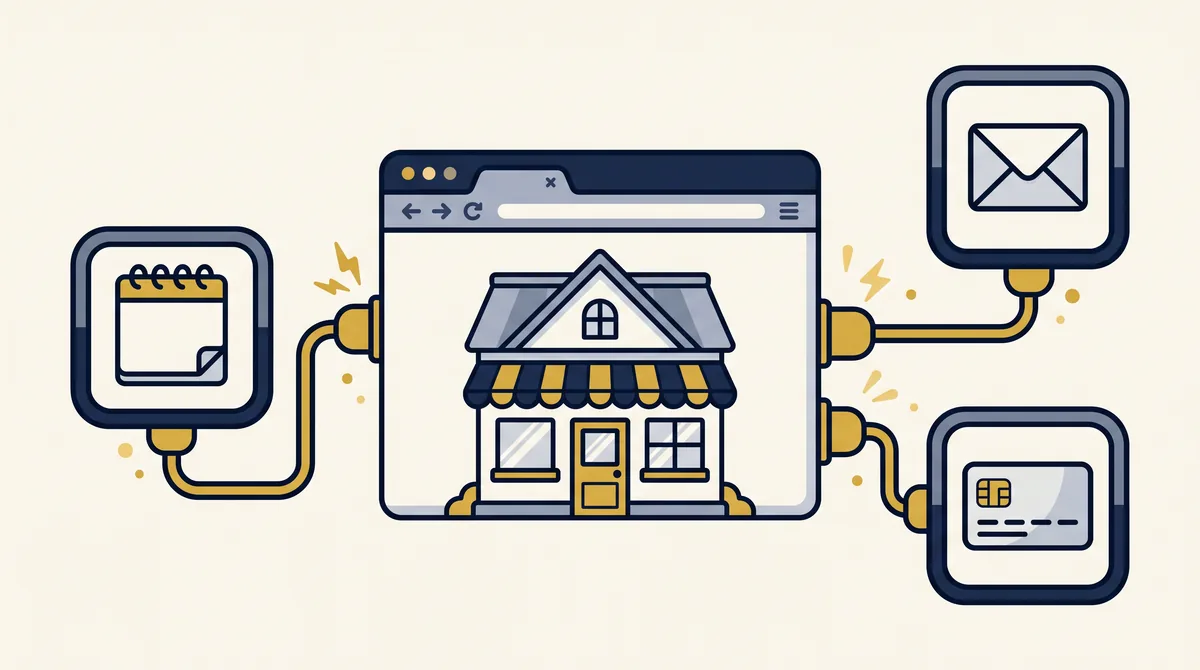
The difference is that you don’t necessarily have to build all of those systems directly into the website. You can connect your website to tools that are already designed to handle them. And in a lot of cases, I actually prefer that.

Your Website Doesn’t Have to Do Everything Itself

Let’s say you want customers to be able to pay you online. You could build an entire payment system into your website. But why?

A service like Stripe already specializes in handling online payments securely. Your website can send the customer to the checkout, Stripe handles the payment, and the customer can be sent back to your website when they’re finished.

The website stays simple. The customer can still pay online. And you are using a company that specializes in processing payments to handle the part they are good at.

The same idea can apply to appointment scheduling, email marketing, customer reviews, and a lot of other things. Your website doesn’t have to become a giant piece of software just because you want it to do more for your business.

What About SEO?

Static websites can also be a really good foundation for SEO. A fast website is better for the person using it, and website performance is one of many things Google can take into consideration.

Static websites can also give the developer a lot of control over things like:

But I do want to make something clear. A static website does not automatically mean you are going to rank at the top of Google. SEO doesn’t work that way.

You still need good content. Google still needs to understand what your company does. Your website still needs to be organized correctly. And if you are a local business, Google needs to understand where you do business.

A fast, well-built website gives you a good foundation. You still have to build on that foundation.

When Would You Need Something More Than a Static Website?

There are definitely businesses that need something more advanced. If customers need to create accounts and log in, that’s different. If customers need their own dashboard, that’s different. If you’re storing private customer information or constantly pulling information from a large database, you may need something more complicated.

At that point, you’re getting closer to a web application instead of just a business website.

But I don’t think a business should start there unless it actually needs to. A contractor doesn’t necessarily need customer accounts. A consultant doesn’t necessarily need a custom dashboard. A restaurant doesn’t necessarily need to build its own online ordering system.

Sometimes the better answer is simply connecting the website to another service that already does what you need.

What About WordPress?

WordPress is another way to build a website, and there are plenty of situations where it makes sense. WordPress gives you a dashboard where you can log in and make changes to the website yourself. It also has a huge number of plugins that can add different features.

But all of that also means there are more moving parts. WordPress itself needs updates. Themes need updates. Plugins need updates. Sometimes one update doesn’t play nicely with another one. There are also additional security and maintenance considerations because you have software, a database, user logins, and plugins running behind the website.

That doesn’t make WordPress bad. It just means it isn’t automatically the best answer for every website. If you need WordPress, use WordPress. If you don’t need it, there may be a simpler option.

Simple Doesn’t Mean Basic

This is probably the biggest thing I want business owners to understand. Simple and basic are not the same thing.

A static website can still look extremely professional. It can have animations. It can work beautifully on phones. It can have custom graphics. It can connect with your CRM. It can collect leads. It can help you build an email list. It can accept payments through outside services. It can track your marketing. It can even trigger other things to happen after somebody fills out a form or makes a purchase.

The website itself can stay simple while everything around it works together. And sometimes that’s the smarter way to build it.

So, Is a Static Website Right for Your Business?

It depends on what you actually need.

If you need a professional website that tells people who you are, what you do, why they should choose you, and what they should do next, a static website may be more than enough. If you need logins, customer dashboards, complicated databases, or software-like functionality, then you may need something more advanced.

The goal shouldn’t be to build the most complicated website possible. The goal should be to build a website that does its job.

That’s really how I look at website design at StoneBridge Solutions. Keep it simple where you can. Add functionality where it actually helps. And build the website around what the business needs — not the other way around.

Ready to See What Makes Sense for Your Business?

Tell us about your business and what your website needs to do — we’ll help you figure out the right fit.

Get Started

Get Website Tips in Your Inbox

Occasional practical advice for small business owners — no spam, unsubscribe anytime.